
Way out on the edge of West Texas is a place with some of the darkest damn night skies in the world and ancient limestone canyons carving deep furrows across the land. The green oasis of the Chisos Mountains looks out over a vast rocky desert in all directions. This fucking park contains about 200 miles of hiking trails, over 100 miles of paved roads, and roughly (get it?) 150 miles of dirt roads. They call this place Big Bend.
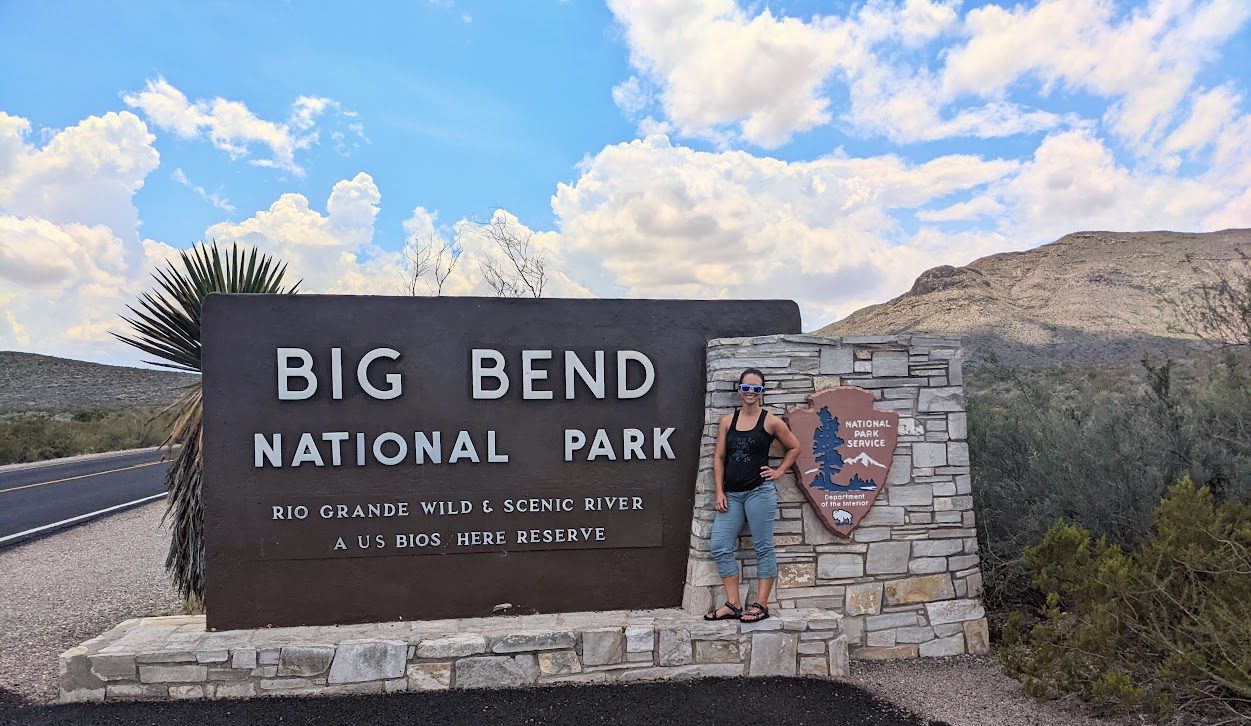
Table of Contents
Big Bend Trails
Hoodoos Trail
I like to think I’m a hiker of discerning tastes. Trails under five miles usually …

Boot Canyon Trail: Backcountry Beauty (and Bears)
The canyon is lush, fertile and even occasionally boasts water depending on rainfall that year …

The Window Trail: Iconic Adventure in Big Bend
Easily identified from a distance where two mountains slope together, creating a spectacular slot canyon, the Window trail is one of the most popular hikes in Big Bend National Park.
Hiking The Rim: Epic Chisos Mountains Adventure
I’d heard legendary stories on the internet of just how great Big Bend National park’s …

Dog Canyon Trail: Peaceful Desert Hiking in Big Bend
This gentle 4-mile out-and-back journey immerses you in the stark beauty of the Chihuahuan Desert, …

East Rim Trail: A Hidden Gem in Big Bend National park
The East Rim Trail gets less hype than its prissy South Rim sister but, in …

Laguna Meadow Trail: Access the Heart of the Chisos Mountains
There’s so much I wish I had known before hiking Laguna Meadow for the first …

Pinnacles Trail: A Stunning Path into the Chisos Mountains
Pinnacles Trail is a challenging yet rewarding hike that leads into the heart of the …
Find a Trail on the Map
Click on the map markers for links to more info about each trail, including my brutally honest trail reports and personally revealing observations from actual hikes.
If you see this after your page is loaded completely, leafletJS files are missing.
Visiting Big Bend National Park
Big Bend National Park is located deep in southwest Texas, far-as-fuck from what most folks consider civilization. The nearest airport is 235 miles away in Midland/Odessa and the nearest (small) towns are over an hour away (Terlingua and Lajitas). If you want to get away from it all, this is a great place to do just that.
Important Info At A Glance
How much does it cost to visit Big Bend National Park?
Every vehicle entering the park is subject to an entrance fee. However, there are no reservations required for entering Big Bend National Park – just pay at any entrance station or visitor’s center when you arrive.
The Park accepts payment by credit and debit cards only – no cash, check, or payment apps. There are no refunds for bad weather, so don’t bother asking.
Entrance Fee Details
- Private Vehicle Fee: $30
Admits one private, non-commercial vehicle (15 passenger capacity or less); valid for 7 days. - Motorcycle Fee: $25
Admits one non-commercial motorcycle; valid for 7 days. - Individual Fee: $15
Admits one individual. Typically used for bicyclists and pedestrians; valid for 7 days. - Big Bend Annual Pass: $55 (good for one year from purchase date)
Covers entrance fees to Big Bend National Park. Pass is available at Big Bend National Park entrance stations or any visitor center. Pass is non-transferable. - Non-commercial group Fees: Organized groups such as Scouts, youth groups, churches, reunions, clubs, etc. that do not qualify for an academic fee waiver are charged as follows:
$30 per non-commercial vehicle with a capacity of 15 or less.
$15 per person traveling in a non-commercial vehicle with a capacity of 16 or more.
Fees will not exceed the commercial rate for the same sized vehicle. - Commercial Group Fees: Companies conducting business in the park are required to obtain a commercial use authorization. The only exception is companies travelling in a 26 person capacity or greater vehicle; such vehicles are charged a flat fee of $200 (commercial use authorization not required).
- Educational Group Fees: Groups entering the park for education purposed are encouraged to check the academic fee waiver for application and qualification information.
Getting into Big Bend National Park for Free
Fee-Free Days – no entrance fee is charged on the following holidays:
- Birthday of Martin Luther King, Jr.
- First Day of National Park Week
- The Great American Outdoors Act
- National Public Lands Day
- Veterans Day
In addition, youth 15 and younger are free. Individuals or families with a valid annual or lifetime pass may use their pass for themselves and up to 3 others.
Free Park Passes – there are a variety of free or discounted passes available for members of the military, volunteers, seniors, individuals with disabilities, and even 4th Grade students. Read more on the NPS website.
What are Big Bend National Park’s hours?
While the park is open 24 hours a day, 365 days a year, each Visitor’s Center and Entrance Station has its own business hours.
- Panther Junction
Every Day 8:30 am – 5:00 pm (open during lunch!) - Chisos Basin
Every Day 8:30 am – 4:00 pm (closed for lunch) - Rio Grande Village
November – April
Every Day 9:00 AM – 4:30 PM (closed for lunch) - Persimmon Gap
November – April
Friday, Saturday, and Sunday, 10:00 AM – 4:00 PM (closed for lunch) - Castolon
November – April,
Every Day 10:00 AM – 4:00 PM (closed for lunch)
For more details about each of these Visitor’s Centers, visit the official website.
Where is Big Bend National Park?
Big Bend National Park is located in the Southwestern corner of Texas, along the Rio Grande river and the southern border with Mexico.
The main highways leading into the park for most visitors are US 385 and TX118, both running south from I-10, which cuts across the state from East to West. Travelers driving East along I-10 will be best served by taking US 385 from Fort Stockton – and be sure to fuel your vehicles either there or in Marathon. Luckily, US 385 runs directly to the Panther Junction Visitor Center, and the park’s gas station is just down the road from there.
Electric vehicle drivers, take note: There are currently no EV stations in Big Bend. Fort Stockton, 130 miles north from park HQ, will generally be the closest town that has them.
Park visitors coming South or East can take US 90 from I-10 to pass through Valentine, Marfa, and Alpine, which is a very pleasant trip all on its own. TX 118 runs south from Alpine to Terlingua and then into the park, or you can continue on to Marathon.
A Final Word of Warning: BRING PAPER MAPS. Seriously, folks, this is the deep backcountry. GPS and mapping apps are not 100% reliable in the best cases, and much less so out here. Don’t be dumb.
If you see this after your page is loaded completely, leafletJS files are missing.
Where is the Big Bend National Park Visitor Center?
The Panther Junction Visitor Center is the park’s headquarters, and is usually the first place you should stop on your trip. It’s where you get permits and pay entrance fees, and just down the road is a service station with gas, diesel, and some basic grocery items.
Read more about the Park’s Visitor Centers here.
If you see this after your page is loaded completely, leafletJS files are missing.
Does Big Bend National Park have internet access or wifi?
As a rule, cell service is unreliable at best throughout most of Big Bend National Park, although you may have signal in the Chisos Basin and in the Panther Junction area.
You can access free wifi at all Visitor Centers, as well as in the Chisos Mountain Lodge and at the Rio Grande Village Store. The internet provided is fast enough to check and send email and messages, but I wouldn’t bet on streaming any videos. You’re in Big Bend, go enjoy nature for fuck’s sake!
As a side note, we do recommend taking a GPS satellite communication device that you can use to keep in touch with loved ones (aka reassure them that you haven’t been eaten by a mountain lion yet). My go-to, and one of the least expensive to buy and own long term, is the Bivy Stick by ACR.
Will I have cell phone coverage in Big Bend National Park?
Don’t count on it. This is one of the most remote places in the United States, and cell phone coverage is unreliable at best along the main roads and camping areas. Service is better in a few of the most visited places, especially the Chisos Basin and the Panther Junction areas.
I have been able to use Google Maps on most of the paved park roads, though service drops out frequently. However, I highly recommend buying a paper map and keeping track of your location at all times in case you lose service. You do not want to get lost out there.
Are there Gas Stations near Big Bend National Park?
Entering along the main park road, you’ll find the Panther Junction Service Station near park headquarters. It has gas, diesel, and a convenience store with a small selection of essential items and basic groceries.
You can also buy gas in the park at the Rio Grande Village Service Station, although that one does not have diesel (for the 1% of you who might care).
If you’re entering the park along 385 (the main entrance), I recommend fueling up in Marathon as it’s a decently long drive. Coming in from the west, you’ll find fuel in Terlingua / Study Butte, and it is a very long drive from there to the fuel stations in the park, so don’t forget to top off!
Learn more about Big Bend Visitor Centers and Service Stations here.
Can I buy ice or firewood in Big Bend National Park?
You cannot buy firewood in Big Bend National Park, because ground fires and wood fires are not allowed. Charcoal fires in the provided grills at the campground are allowed, however, and you may be able to find charcoal at the park stores if you didn’t plan ahead.
You can buy ice in the park, along with various groceries and essentials, at the park service centers near Panther Junction and Rio Grande Village, as well as at the Castolon Park Store on the western edge of the park.
Can you have a fire in Big Bend National Park?
Listen up here, as this one is a little uncommon and may disappoint you. Wood fires and ground fires are prohibited in the park. You cannot light up a traditional campfire and roast s’mores at Big Bend National Park. However, you may have a charcoal fire in an above-ground grill as long as you pack your ashes out.
Liquid-fuel stoves are also allowed. I personally recommend the Coleman Gas Camping Stove (the green one) as an affordable and durable option that has served me well for years now.
Can you bring your pets to Big Bend National Park?
Bad news, Fido! While pets are allowed in the park, your pets are not allowed on trails, off roads, or on the river. Your pet can only go where your car can go. Also, bears and mountains lions exist in the park, and mountain lions specifically have been known to kill pets, so maybe just leave Fido at home for this one.
What’s the weather like in Big Bend National Park?
For the most part, it’s a desert, and acts like one! Check out my full article on Big Bend Weather if you have more questions.
Lots of sunshine means average temperatures over 100 degrees Fahrenheit during summer months in the lower desert areas, with winter highs in the 70’s. At night, the desert is often 70-80 degrees over the summer (ouch), and cools down to the 40’s during the winter. The Chisos Basin and other mountain elevations are generally 10-20 degrees cooler than the rest of the park all year round.
Most of the park is pretty dry year round, but the rain picks up a little over the summer, often peaking in August. My experience is that the Chisos Basin is a bit of a storm magnet during the rainy season, so watch your forecasts and always pack for changing weather.
You can always find the latest weather forecast for Big Bend National Park from the National Weather Service here.
Park-issued alerts are on their website right here.
But my favorite weather report is the Big Bend Daily Report, produced by the Big Bend Natural History Association, because it’s simple, clear, and complete.
When is the best time of year to visit Big Bend National Park?
When you should hike in Big Bend depends on bit on your goals and what you want to experience at the park. However, if you’re planning to hike or bike the desert trails and explore the backcountry, I would strongly recommend planning your trip over the winter, in November, December, January, or February. Not only is the temperature much cooler, but there’s less rain as well, making for lots of enjoyable trails.
Depending on the weather, October and March often have the best all-around weather, and they’re more popular for that reason – if you don’t mind a slightly more crowded park, they’re both great options. (Note: I personally recommend skipping Spring Break / mid-March in Big Bend.) April can also be very nice, but you’ll encounter higher temperatures and often busier trails as well.
The busy seasons, according to the National Park Service, including mid-March especially (and March/April generally), as well as the Thanksgiving and Christmas holiday seasons.
Is there an ATM at Big Bend National Park?
Yes! In fact, there are three. You’ll find ATMs in Big Bend National Park at the park service stations in Rio Grande Village and Panther Junction, as well as one at the Chisos Mountain Lodge.
Places to Stay in Big Bend National Park
Big Bend is wild, spectacular, and filled with historical landmarks. Read on to learn about your camping options, and if you’re interested in learning more about some of the historical sites in Big Bend, you can check out A Brief History of Bend Bend here.
Camping in Big Bend
Note that reservations are required for campsites within Big Bend National Park. There’s no first-come, first-served camping here, and no “boondocking” or “dispersed camping” allowed, so don’t be a dummy! You need to book your Big Bend campsite through Recreation.gov well in advance.
The one exception to that rule is that most permits for desert backpacking and the primitive roadside sites along various primitive roads are available in person only at park visitor centers. For the 23 most popular of these campsites, you can reserve online up to 6 months in advance. The remaining 41 campsites along the old River Road, Glenn Springs Road, and Old Maverick Road require that you obtain a permit in person at the Panther Junction visitor center or the Chisos Basin visitor center 24 hours before your first night’s stay. Good luck…don’t die out there.
All front-country campgrounds provide access to drinking water and restrooms, though you may sometimes have to walk a little ways and some of the facilities are more primitive than others (looking at you, Cottonwood). You’ll also find picnic tables and grills at these campsites. Some sites may have overhead shelters – check the listings to verify.
Note that only the Rio Grande Village area has showers, and that those showers are coin operated. Bring your change!
4 Front-Country Campgrounds in Big Bend National Park
There are 4 front-country (aka normal) campgrounds open to the public in Big Bend National Park.
Chisos Basin Campground: The park’s central campground, open year round. FYI, the road to get into the basin is extremely narrow and winding. NPS recommends against trailers over 20 feet and RVs over 24 feet, and honestly that might be generous. My Honda Pilot felt pretty darn cramped on that road.
Rio Grande Village Campground: Located in the far south of the park, also open year round. However, there are only 24 campsites available here May through October, due to extreme heat in the region during the warm season. And in case that’s not enough of a hint, plan for extreme fucking heat if you visit here during the summer.
Rio Grande Village RV Campground: Next to the store and operated by a 3rd party, this is Big Bend’s only dedicated, full hookup RV campground. Instead of recreation.gov, you’ll need to head to chisosmountainlodge.com to reserve your Big Bend RV site. Note that the warning about heat from the regular campground also applies here – it’s extremely fucking hot in the summer.
Cottonwood Campground: The westernmost campground, these sites are alongside the Rio Grande. The Castolon Store is nearby, and carries ice, groceries, and various small essentials. Cottonwood is only open November through April, though the store is listed as open 10:00 am – 5:00 pm daily. Note that there is no fuel here, or anywhere nearby.
Backcountry Camping in Big Bend National Park
If you want to really get close to the wilderness, this is the way.
Big Bend offers 64 primitive campsites along various backcountry roads. This is how to get a real glimpse into the heart of Big Bend, as these sites are located in some of the most remote desert areas of the park and many require hours of challenging driving in 4×4 cars to reach them. The BBNP NPS defines a high clearance vehicle as an SUV or truck with at least 15 inch tire rims plus 8 inches of ground clearance from the lowest point under the car (I might have crawled under my Honda Pilot to measure this) – don’t go out there with less!
Big Bend’s primitive roadside campsites offer a small flat gravel space to set up camp next to your vehicle. There is no shade, no toilets, and no other amenities. Generators are also a no-no in the backcountry.
As noted previously, you can reserve online up to 6 months in advance for the most popular of these sites. For the rest, you’ll have to show up in person at the Panther Junction or Chisos Mountain Visitor Centers to see what’s available.
Primitive Roadside Campsites— Improved Dirt Roads
Primitive roadside campsites are located along improved dirt roads that are usually accessible to most high-clearance vehicles, even without four wheel drive – except after rain. After rain, you’re fucked and may need a 4×4 to access (or escape from) these campsites. You’ve been warned!
Primitive Roadside Campsites— Croton Springs (2 campsites)
Primitive Roadside Campsites— Grapevine Hills (5 campsites)
Primitive Roadside Campsite— Hannold Draw (1 campsite)
Primitive Roadside Campsites— K-Bar (2 campsites)
Primitive Roadside Campsite— Nine Point Draw (1 campsite)
Primitive Roadside Campsites— Old Maverick Road (5 campsites)
Primitive Roadside Campsites— Paint Gap (4 campsites)
Primitive Roadside Campsites— Primitive Dirt Roads
These campsites are only for the experienced hiker and skilled driver. The primitive dirt roads are maintained for rugged high clearance vehicles only and 4 wheel drive is a must. On these roads you may encounter rocky, exposed bedrock, deep ruts, and extensive sections of soft sand/mud. That means passenger cars, minivans and RVs cannot take these roads, not even to drive to a trailhead! Rain will make these roads difficult to drive or impassable.
Always speak with a ranger about current road conditions.
Primitive Roadside Campsites— Glenn Springs Road: Robber’s Roost, Twisted Shoe, Glenn Sping, Rice Tank, Chilicotal and Nugent Mountain
Primitive Roadside Campsites— Old Ore Road: Candelilla, Camp de leon, La Noria #1-2, Ernst Tinaja, Ernst Basin, Willow Tank, Telephone canyon #1-2, Roy’s Peak vista, McKinney Springs
Primitive Roadside Campsites— River Road (east and west): La Clocha #1& #2, Gravel Pit #1-3, Solis #1-2, Fresno, Talley #1-4, Dominguez spring, Loop camps #1-2, Johnson’s ranch #1-2, Gauging station, Black Dike, Buenos Aires #1-2
Chisos Mountain Backcountry campsites
There are also 42 backpacking campsites in the Chisos mountains. Most of these require advance reservations, which can be placed up to 6 months in advance. You must camp in designated campsites and obtain a permit. Don’t get confused by the terminology: in this case, a “permit” is simply a reservation. You can get these permits at recreation.gov.
The backcountry campsites in the Chisos Mountains of Big Bend National Park are:
- Juniper Flat (3 sites)
- Boulder Meadow (5 sites)
- Pinnacles (3 sites)
- Toll Mountain (1 site)
- Boot Canyon (4 sites)
- Juniper Canyon (1 site)
- East Rim (9 sites)
- South Rim (4 sites)
- Colima (3 sites)
- Blue Creek (2 sites)
- Laguna West (3 sites)
- Laguna Meadow (4 sites)
Wilderness backpacking
For the utmost experienced and prepared hiker, there is wilderness backpacking, which is permitted in most desert areas of the park. Wilderness backpacking is simply hiking out into the desert and setting up camp – after obtaining a permit and following a few rules along the way.
In order to obtain a permit to do desert wilderness backpacking, you will have to give a ranger a detailed itinerary, have all the backpacking equipment needed and be able to hike at least 30 minutes away from any road. Camping near or alongside the road is strictly prohibited and you must be at least 100 yards from any trails.
If you’re ill prepared, seem like a newb, or your trip seems inappropriate, the rangers have every right ro refuse to issue a permit and they will (refuse, that is)!
The park places strict limits on the number of backpackers in each area and all rules must be followed to the letter.
Popular trails from which to wilderness backpack are:
- Mule ears/Smoky Creek Trail
- Chimneys Trail
- Marufo Vega and adjoining trails
- Marisal Rim trail
- Blue Creek Trail
- Juniper Canyon
- Dodson trail
- Elephant Musk
- Outer MOuntain loop
- Mesa de Anguila
Lodges, Hotels, and Other Places to Stay
Camping isn’t your only option when visiting Big Bend. If sleeping beneath the stars isn’t your jam, consider these alternatives.
The Chisos Mountain Lodge
In the heart of the Chisos mountains, near the Chisos campground, Big Bend boasts a full service lodge. Complete with 72 non-smoking rooms, working A/C, a mini fridge and hot running water, there’s nothing more that you could ask for in a place as remote as this!
On our first trip to BBNP, we had planned on staying in the backcountry for a few nights. Everything went awry and it rained cats and dogs on us the entire first night. We were eating dinner at the Chisos mountains restaurant the next day when we signed into the Wi-Fi to discover that rain was again forecasted. At that point, I’d had enough. We hightailed it back to our camp, packed the fuck up and got us a reservation at the lodge (out of the rain).
At that point, the lodge felt like the height of luxury – and you do pay for this luxury, with many of the rooms coming in around $200. But trust me, if you really need the shelter, it’s well worth the price.
Places to Stay Near Big Bend National Park
Those looking to stay a little closer to civilization will find a number of a very cozy and rather pricey options in the Terlingua area. Terlingua is the best option because it provides access to both the National Park and Big Bend Ranch State Park, as well as various outfitters and river guides.
There are a few options close to the park area in Lajitas, and north of the State Park in Presidio. Beyond that, you’ll find yourself significantly further north.
That said, the Big Bend area of west Texas does have a number of charming small towns, and travelers will find things to enjoy in Marathon, Alpine, and perhaps the most famous, Marfa.
Plants and Animals in Big Bend National Park
The Landscape of Big Bend
The land here is fucking incredible; there are so many cool facts that it’s hard to know where to even start. There are three ecosystems within the park, earning Big Bend the slogan of having “three parks in one” – desert, mountains and river.
Part of the Chihuahuan desert is housed within BBNP, representing the largest protected portion of the Chihuahuan desert in the United States. This desert is the wettest of the four deserts in North America but even so it typically gets less than 10 inches of rainfall per year.
In the heart of Big Bend are the Chisos mountains, which were formed by volcanic explosions 40-60 million years ago and then were whittled at by the forces of erosion. This part of the park is about 20 degrees cooler than the rest of BBNP and therefore one of the most popular areas.
Big Bend Wildlife
Did I mention it’s hard to know where to start with this place? Big Bend is home to 11 species of amphibians, 56 species of reptiles, 40 species of fish, 75 species of mammals, over 400 species of birds, and about 3,600 species of insects. The park boasts more types of birds, bats, butterflies, ants, scorpions, and cacti than any other national park in the United States.
Bears of Big Bend
Do not attempt to feed or pet the bears. You’ll only get them killed, and maybe yourself, too – and you’ll deserve it, whether you survive or not. Keep our wildlife wild, people!
Mountain Lions in Bid Bend National Park
As obligate carnivores, mountain lions eat only meat. Their preferred diet consists mainly of deer, though in the Big Bend region, javelina and rabbits may also be on their menu. They rarely attack humans, but if you do get attacked, fight for your life! The best way to avoid mountain lions is to be loud and in a close-knit group. They are most likely to attack small solo targets, so don’t let your kids wander off alone. This is the wild, people. Be smart, and you’ll be fine.
Big Bend’s Other Animals
Species distinctive to the Chisos Mountains include the Mexican duck, lucifer hummingbird, Mexican jay, black-capped and gray vireos and the varied bunting. The Colima warbler is considered Big Bend’s specialty bird, because the Chisos Mountains are the only place in the U.S. where the bird nests and breed.
Big Bend is home to both mule deer and a subspecies of whitetail deer known as Carmen whitetail. In the United States, Carmen whitetail are only known to occur in Big Bend and a few isolated mountain ranges around the park. The collared peccary, also known as javelina, is also common to the area.
Big Bend’s most numerous and commonly seen cat, bobcats live throughout the park, mainly in brushy areas near water. They are normally solitary and not often seen during the day.
Despite billions of dollars spent on predator control projects throughout the United States, coyotes are more abundant than ever. They have survived where other carnivores have not and provide vital population control of rodents and other small mammals. Coyotes fill the void left by the disappearance of the wolf.
Big Bend Plants
If I’m honest, I’m not much of a flora person. I enjoy looking at the beauty of a places’ flora but I’m not one of those people who loves to study plants. Still, I have to say that there are some pretty gnarly plants in this region.
With the incredible 3 ecosystems, the park is home to more than 1,200 species of plants. There are more than 60 cacti species within the park – ouch! Thanks to the sheer diversity of this place, you can find plants from orchids to willows to desert succulents.
Trees of Big Bend
Up in the higher (and cooler) elevations of the Chisos, you run into Piñon, oak and juniper woodlands. Once you hit those forested slopes it feels like you are in a whole other world where the desert is far, far away. The Chisos makes up less than 2% of the park’s land but is some of the most heavily visited.
Desert Plants in Bend Bend National Park
Some of the super recognizable desert succulents are Sotol, Yuccas and Agave.
Sotol (Dasylirion leiophyllum) is composed of a cluster of numerous linear, flattened leaves that have hooked teeth along the margins of the leaf. The leaf bases are spoon-like. A tall flower stalk is produced each spring that has light colored, nondescript flowers clustered together. The fruit is three-winged and triangular.
Some people in the region also like to make liquor with Sotol. I have to admit that I’m not a fan of it, but you can try it for yourself down in Terlingua.
Yuccas are members of the lily family and bloom every year if there has been enough rainfall. The four yuccas of Big Bend National Park—Faxon yucca or giant dagger (Yucca faxoniana), beaked yucca (Yucca rostrata), soaptree yucca (Yucca elata) and Spanish dagger or torrey yucca (Yucca treculean)—all have trunks that elevate the leaves above the ground.
The trunk of the Yucca plant is often covered with dry, dead leaves. The leaves are long, fibrous, and spine-tipped. The cream-white flowers appear in late spring and produce a fleshy or dry fruit with black seeds.
Native Americans ate the flower buds, petals, and young stalks. The fruits and seeds were also eaten. The fibrous leaves were used to make cloth, rope, mats, sandals, and baskets. The root provided soap and was used as a laxative (note to self: do not eat).
Agaves are low-growing evergreen plants with succulent leaves that form a bowl shape or basal rosette. Colonies often form from underground sprouts. The leaves are tipped with a hard spine and the leaf margins may also have spines. Agaves bloom once in their lifetime and then die.
Agave lechuguilla, commonly known just as lechuguilla, a name that means “small lettuce”, is an Agave species found only in the Chihuahuan Desert. The plants have thick, leathery leaves with dagger-sharp terminal spines and often grow in massive colonies that can be nearly impenetrable by foot or horseback.
Lechuguilla was a very important source of fiber for Native Americans and is still used today to make rope in Mexico. The roots of the plant are high in saponins, so they taste bitter but are a good source of soap. The lechuguilla blooms once after growing for between three and twenty years.
Activities in Big Bend National Park
There is a never ending list of “things to do” in Big Bend – so many, in fact that your head will be spinning at the thought of trying to cram them all in. You’ll need to take several trips to this park to experience all it has to offer.
Hiking
There are more than 150 miles of trails within Big Bend National Park, making this one of the park’s most popular pastimes. Note that hiking is the only thing allowed on these trails. Mountain biking is prohibited on the trails and horses are permitted only a few select trails.
Driving
For those with a regular car – maybe even a lowly Prius – the 30 mile Ross Maxwell scenic drive is a jaunt that can be enjoyed by all. This road skirts the Chisos MOuntains, runs along the Rio Grande and then makes its way to Santa Elena Canyon trailhead. There are several pullovers from which to hike out a bit, take a selfie and multiple scenic vistas such as Sotol Vista, Mule Ears Overlook, and Tuff Canyon.
For the more seasoned adventurer, Big Bend offers some truly challenging unimprove roads from which to access the most remote corners of the park. Driving out to the Mariscal Mine Distrcit and Mariscal canyon can be quite the thrill.
Rafting
Rafting one of the canyons of the park is also a popular activity. Permits are required and there are several local companies that offer river tours. This is not the place for a newb to try their hand at rafting. People have died trying to paddle the canyons. Be an expert or hire one.
Popular locations for rafting are through Santa Elena canyon, mariscal canyon and boquillas canyon. Beavers, turtles, blue heron, kingfishers are commonly seen. In some stretches in the canyons, because the walls are so high, sunlight hardly ever shines.
Depending on water levels, some trips can be challenging, with some sections of Class IV rapids or downright dry with portaging. You can check the CFS flow rates here.
These trips can be as short or long as you please, with options from daytrips to overnight trips.
Horseback Riding
While I’ve never personally seen people one horseback in the park, they are allowed. There are several stables that also offer guided horseback rides. Horses are not allowed on paved roads and road shoulders but are permitted on all gravel roads. Cross-country travel is permitted in the park except for select trails within the Chisos mountains. See all the rules and regulations here.
The Hannold Draw primitive campsite has a corral large enough to hold 8 horses. It is the only primitive campsite with a corral.
Stargazing
We’ve all heard the famous line in the song: “the stars at night are deep and bright… *insert rapid claps* deep in the heart of Texas!” and Big Bend National park is an exceptional place from which to admire these deep and bright stars.
In fact, Big Bend has the least light pollution of any other national park unit in the lower 48 states and became designed at an International Dark Sky park in 2018. As long as there is no cloud cover, even those of us with no astrology knowledge will be blown away by the twinkling of the stars.
Birding
For the geek at heart, BBNP is a fabulous place (so I am told) to bird. There have been over 450 species documented in the park. Because Big Bend is relatively rich in water compared to much of the surrounding desert land, bird populations tend to be concentrated.
Spring is the most popular birding season due to the large number of migrant bird that come through – some quite rare. The peak season is the last two weeks of April-the first week of May.
Particularly fine places for birding are:
- Rio Grande Village on the Nature trail and the Daniels Ranch district
- Languna Meadow and Boulder Meadow in the Chisos
- Cottonwood campground
- Dugout Wells
- Sam Nail Ranch
Thanks for reading!
There you have it! A quick overview of everything you need to know about Big Bend National Park. If you want to dig in deeper, I’ll be working on focus articles for each and every topic covered here, plus even more as I discover them. Big Bend is a fascinating place for all people, and there is a nearly endless amount of wilderness to explore!