
Have I mentioned yet that Big Bend is a special place? Just as its flora is impressive, so is its fauna. Big Bend is home to an incredible diversity of wildlife. Animal species in the park include 11 species of amphibians, 56 species of reptiles, 40 species of fish, 75 species of mammals, over 400 species of birds, and about 3,600 species of insects (ew).
The park is home to more types of birds, bats, butterflies, ants, scorpions than any other National Park. If you’re into the creepy crawlies (you nasty bug lover), you’re in luck.
But don’t worry, there are plenty of animals to get psyched about for the normal folks, too! Read on to learn more about the many different kinds of Big Bend wildlife.
Table of Contents
Birds of Big Bend
Birding fans, forgive me. While I enjoy looking at birds as they cross my path, I am woefully uneducated on birding shit. But from what I understand, Big Bend is a birder’s paradise.
Species distinctive to the region include: the Mexican duck, lucifer hummingbird (yikes!), Colima warbler, Mexican jay, black-capped and gray vireos and the varied bunting.
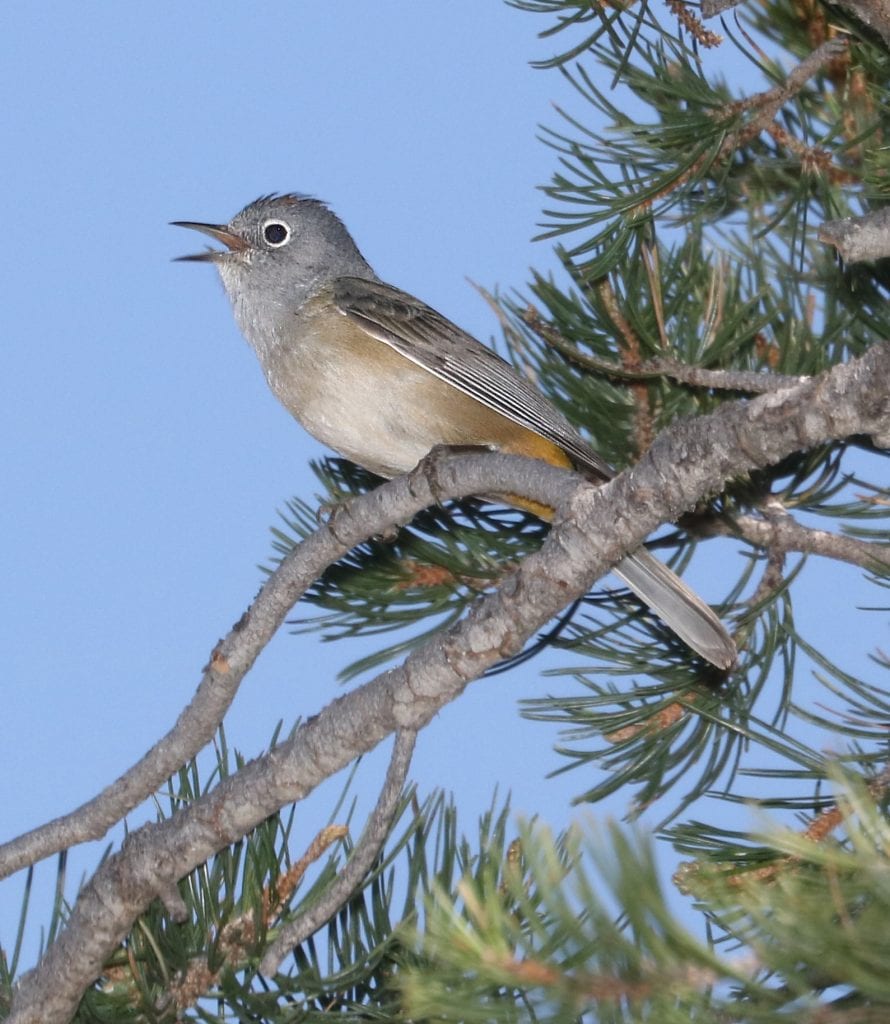
Unique to the Chisos Mountains: Colima Warblers
Fun fucking fact: The Chisos Mountains are the only place in the US where the Colima Warbler nests and breeds. Go forth and fuck, little Colima Warblers!
Aren’t they cute?
Birding in the Rio Grande Village Area
The Rio Grande village is a particularly hot birding spot year round. Some great spots include the Nature Trail off the southeast corner of the campground and the mesquite thickets across the road to the north. You should also wander the floodplain behind the store and stop by the Daniels Ranch.
Throughout this area you can feast your eyes on the following:
- white-winged, mourning, and Inca doves
- the yellow-billed cuckoo
- Say’s and black phoebes
- verdin
- summer tanager
- painted bunting
- northern cardinal
- orchard oriole
- vermillion, ash-throated and brown-crested flycatchers
- Bell’s vireo
- curve-billed thrasher
- black-tailed gnatcatcher
Plus, some larger birds are found in the area including Cooper’s hawks, turkey vultures, and black vultures.
At the west end of Rio Grande Village is the Daniels’ Ranch picnic area. The cottonwood trees across from the ranch ruins are (I hear) one of the best spots to find both golden-fronted and ladder-backed woodpeckers. You can also find northern flickers hanging out here.
Consider a short stroll down to the Rio Grande River to search for the Mexican Mallard, and both green and blue-winged teals. Look up and you may see northern rough-winged, barn, or cliff swallows flying overhead.
So yeah, that’s a lot of birds!
Mammals in Big Bend
Apart from birds, the park is home to many fascinating mammals, most of which visitors will never see due to their elusive, shy nature. And that’s a good thing for some of these suckers (who really wants to see a mountain lion on the trail?!).
Among the mammals of Big Bend are mountain lions, mule deer, Carmen whitetail, javelina, bobcats, coyotes, grey fox, ringtails, badgers, bats, squirrels, rabbits, hares, nutria, black bears and bighorn sheep.
The two most obviously dangerous mammals of Big Bend, and the ones to be aware of on the trail, are the black bear and mountain lion.
Black Bears in Big Bend National Park
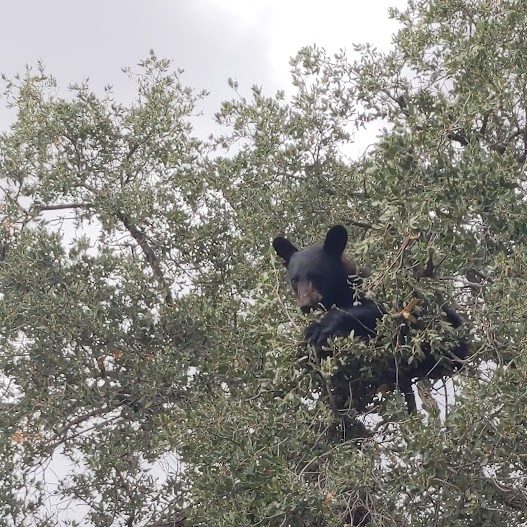
Let’s start with the black bear. If you see a black bear in Big Bend, count your lucky starts and admire them from as far away as convenient. Our very first visit to Big Bend, we had at least 5 black bear sightings within the course of 5 hours!
A Brief History of Bears in Big Bend
Way back when – ok, in the early 1900s – black bears were common in the Chisos mountains in BBNP. But by the time the park was officially established in 1944, almost all of the black bears were gone. God’s Country has a sad history of hunting many animals to extinction and black bears were one of those species.
At some point in the 1980s, a female black bear from the Sierra del Carmen, located in Northern Mexico, decided to take a trip. She left the mountains of Sierra del Carmen, ambled across miles of desolate Mexican desert, swam across the Rio Grande and then crossed yet more desert to finally arrive in the Chisos Mountains.
She then popped out some adorable baby bears in the park, and that was the beginning of breeding black bears being re-established within BBNP.
Where are Black Bears found in Big Bend?
Most of the Big Bend bear population lives within the Chisos Mountains and surrounding foothills thanks to the abundant food, water, shelter and cooler temperatures here.
However, some males and non-breeding females have been found in the low desert areas further out.
How many Black Bears are there in Big Bend?
While the exact population here is unknown, researchers believe that there are around 30-40 black bears in Big Bend National Park.
What, you were expecting a bigger number? Sorry! But that’s why it’s so important to avoid feeding or interacting with them. Human interaction often gets bears killed, so enjoy these furry friends from afar, please.
What do Black Bears eat?
Black bears are omnivores but primarily feed on nuts and berries. In Big Bend, they eat acorns, pinon nuts, madrone, juniper and sumac berries, sotol hearts, persimmon and cactus fruits and mesquite beans.
They are what is called opportunistic carnivores and will eat insects, carrion and may even hunt deer and javelina if the need arises. Black bears are most active in summer and fall as they prepare for “hibernation”, which looks a little different in Texas than it does in other parts of the country.
The black bears of Big Bend National Park do not hibernate in a traditional sense. Because winter in Texas is relatively mild, they become dormant from January-March and spend most of their time resting in dens or surface beds.
During this time, their metabolism slows but they are awake much of the time and even come out to forage periodically.
Mountain Lions in Big Bend National Park
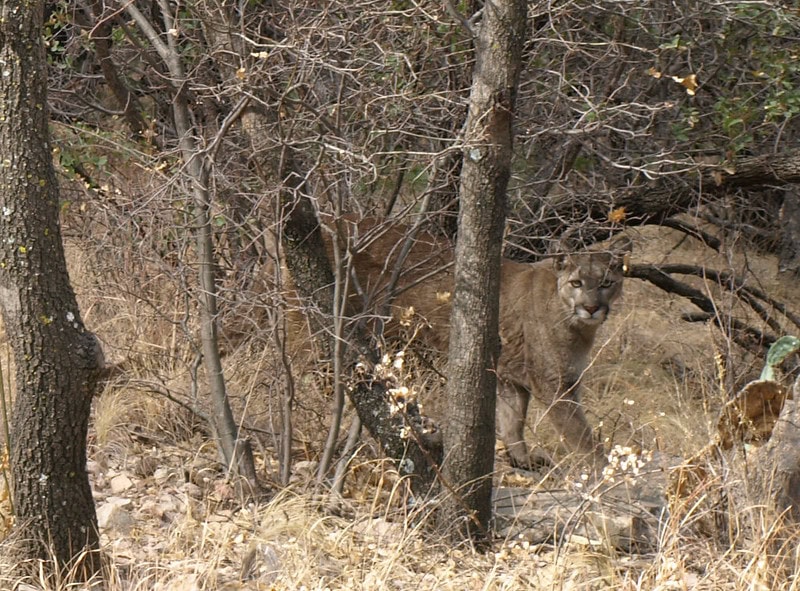
On to mountain lions. Pumas. Panthers. Whatever name you grew up knowing them by.
Thankfully, mountain Lion sightings in Big Bend are much more rare than black bear sightings. Nervous nellies, take heart that there have been no recorded mountain lion fatalities in the history of Texas. So breathe easier (talking to myself here).
How many Mountain Lions are there in Big Bend?
There are approximately two dozen mountain lions that call Big Bend National Park home.
NPS writes that more than 150 mountain lion sightings are reported each year. With just over half a million visitors to the park each year, that means you have a .03% chance of seeing a mountain lion.
Most sightings happen along park roadways in the evening, if you’re angling for one (but why would you?).
How to Avoid Mountain Lions in Big Bend
The most important safety tips I have are to travel in groups, make plenty of noise, and keep children close. Do all this, and you’ll likely never see or hear a mountain lion.
Be on higher alert for mountain lions on Lost Mine, Basin Loop and Laguna Meadows trails because these trails boast a high number of sightings. This is because of the landscape of those trails.
Mountain lions are stealth hunters and like drainages, thick vegetation, and ridges. Incidents have been reported at these types of features along the above mentioned trails.
Mountain lions also like canyons, where oaks, ponderosa and pinyon pines, alligator juniper, and Texas madrone trees thrive, and prey like to gather. Stay alert any time you find yourself in a wooded canyon.
Coyotes of Big Bend
Despite efforts from farmers, ranchers and the government (to the tune of billions of dollars), the coyote still roams Big Bend. One of the quintessential animals of Texas, their howls and yips often fill the starry night sky.
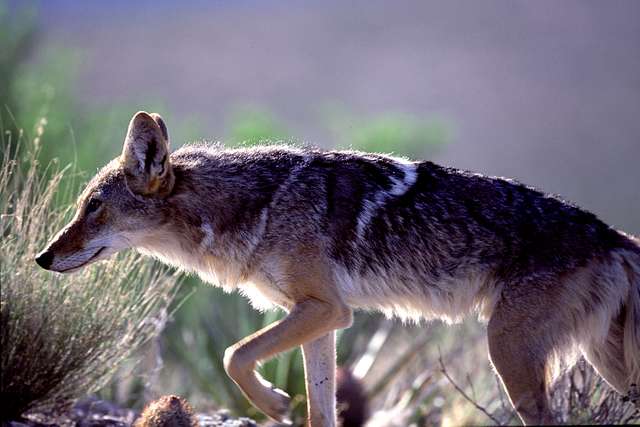
Coyotes are actually fascinatingly adaptive. They thrive in the face of adversity and have refused to let extermination efforts take them out. Unlike bears, bison, big horn sheep and mountain lions who are easily extirpated (killed off).
When coyotes are aggressively hunted, they breed earlier and have larger litters than they would in times of milk and honey. Unlike those other bitches, they refuse to die out!
Invasive Species: Nutria in Texas
Enough of predators, though. Nutria are an invasive species of Big Bend. If you google “Nutria in Texas” one of the top search results is “can I shoot a Nutria in Texas”. How utterly Texan.
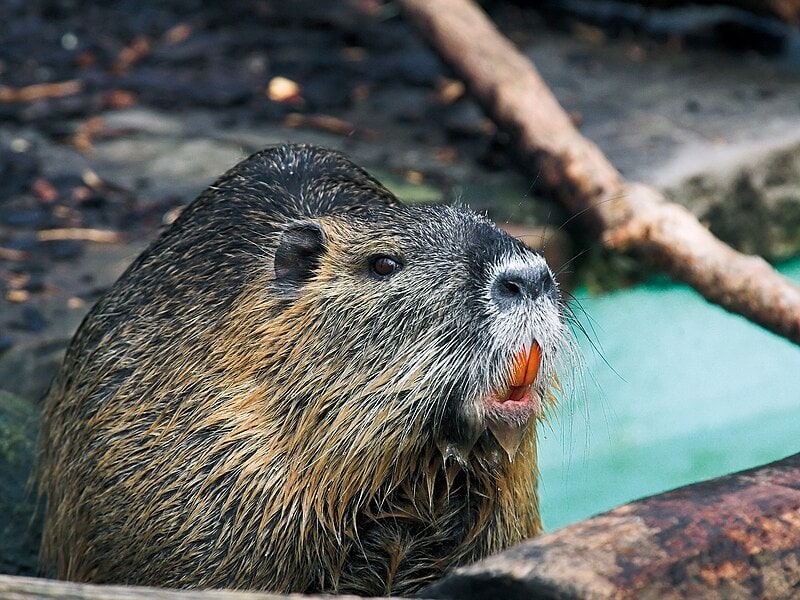
You’ll also find them in a Texas Parks and Wildlife article entitled “Texas’s most unwanted plants and animals”. According to Texas Parks and Wildlife, these rodents look like beavers without the beaver tail. They love to burrow and eat aquatic vegetation, which sounds cute. But these fuckers actually cause serious erosion, damage roads, and kill off aquatic vegetation, which is why they are so unloved.
Desert Bighorn Sheep
Desert Bighorn Sheep, not to be confused with larger and invasive aoudad sheep (surprisingly not included in the Texas Parks and Wildlife “Texas’s most unwanted animals and plants” article), are another comeback story for Texas.
In the 1800s there were lots of Bighorn Sheep in Texas but by 1960, thanks to, well, human interference, they had been extirpated.
Don’t know what that word means? Well I didn’t either until I started doing research on wildlife of Texas and I then became dishearteningly familiar with it. It means rooted out completely. Fucking destructive humans.
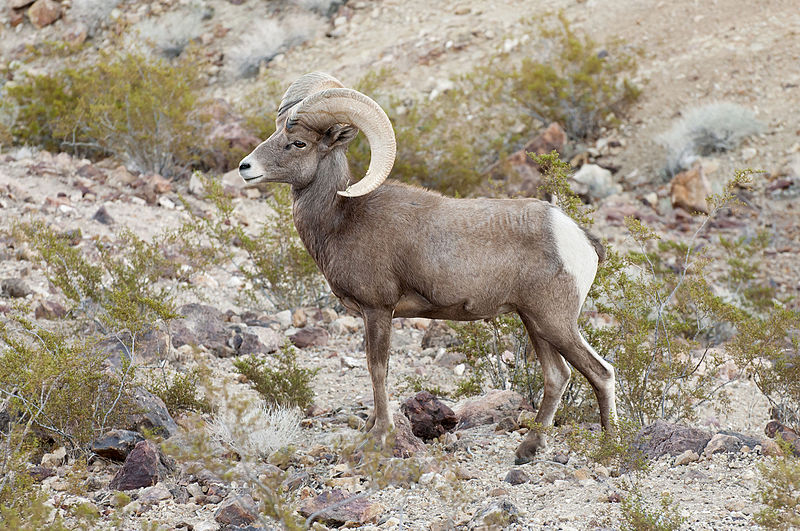
Desert Bighorn are chunky fuckers, about the size of a mule deer. Their truly distinctive feature is their curving horns that can weigh up to 30 pounds. These are used for cracking open and eating cacti, which is an important adaptation.
They’re also well-suited to the desert. These sheep can go weeks without a permanent water source and can lose up to 30% of their body weight and still survive.
Deer in Big Bend
Not much to say here – I think most people are pretty familiar with deer.
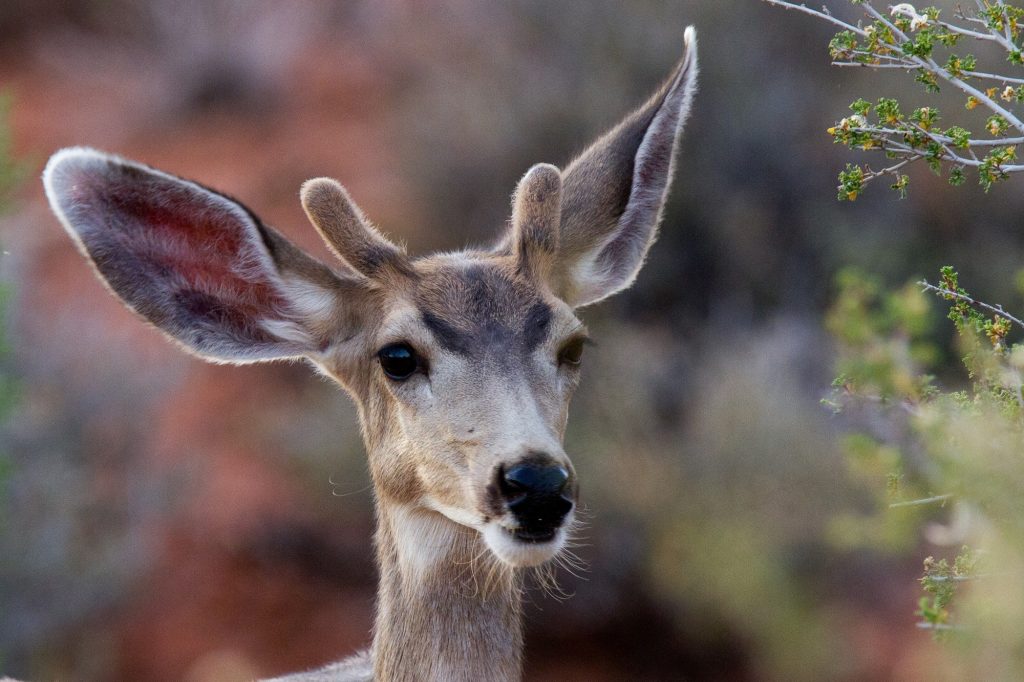
There are two deer species found in Big Bend national park – the Carmen whitetail and the less common mule deer. You can tell the two apart by the mule deer’s distinctively large, mule-like ears and their dark forehead that contrasts nicely with their gray face.
Big bend Bugs
Sorry! I don’t do insects. They pretty much all creep me the fuck out (I know, I’m a chicken!).
If you want more information on the bug life of Big Bend National Park, you can find it on the official park page.
Moving on!
Venomous Snakes in Big Bend
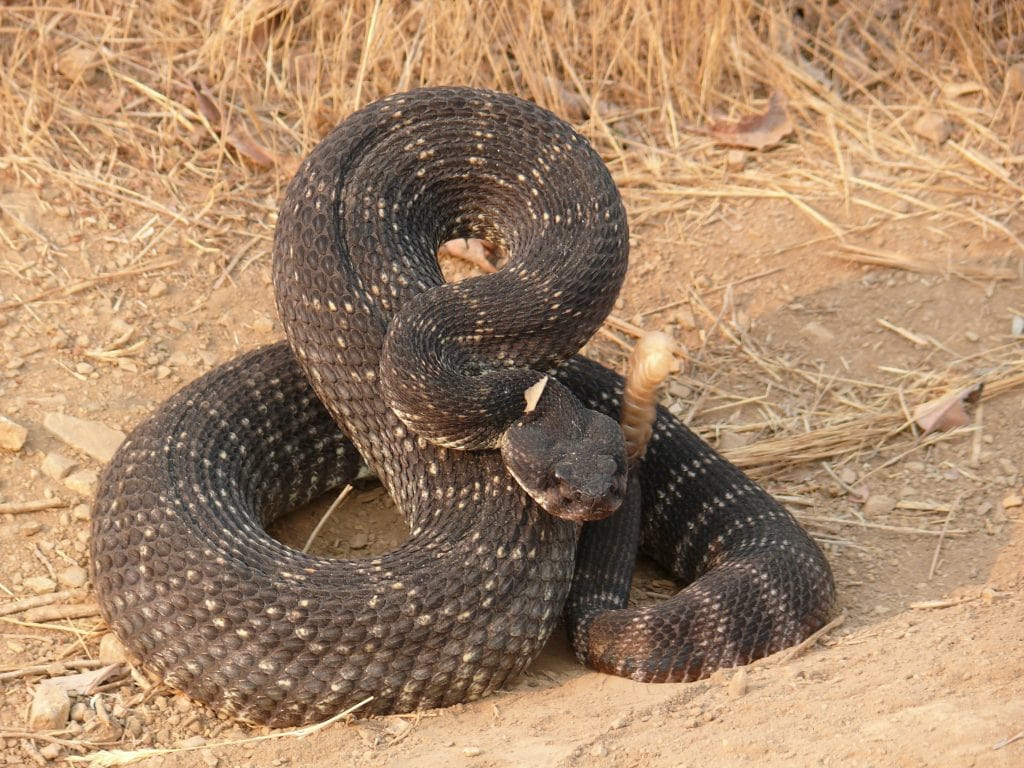
Among the reptiles of Big Bend, there are 5 venomous snakes that call the park home. They are:
- the Trans-Pecos Copperhead
- the Western Diamondback Rattlesnake (or ‘rattler, as we like to call ‘em in these parts)
- the Mojave Rattlesnake
- the Black Tailed Rattlesnake
- the Mottled Rock Rattlesnake
Of these, the Western Diamondback is the most dangerous because it is an aggressive snake. These fuckers don’t take any disrespect and cause the most human fatalities of any snake in America. Give them a large berth and don’t go sticking your hands in cracks and crevices.
Lizards & Reptiles
There are variety of lizards found in Big Bend National Park, many of which you will hear scrambling about but often not see. They tend to startle me when I hear them skittering through the brush, making me think something much larger (omg is a mountain lion about to eat me?!) is hiding nearby.
There are a few notables worth mentioning. First, we’ve got the Chihuahuan Greater Earless Lizard, which has no external ears but does boast a gorgeous multicolored body that shimmers in the sun.
Next to watch for is the Texas Horned Lizard, who loves to gorge on harvester ants and can squirt blood from its eyes at large predators (aka don’t fuck with them). Finally, there’s the Round Tailed Horned Lizard, who camouflage themselves as rocks for protection – tough to spot one of these!
Too Long: Didn’t Read;
This is only the tip of the iceberg for fauna of Big Bend. With 11 species of amphibians, 56 species of reptiles, 40 species of fish, 75 species of mammals, more than 450 species of birds, and approximately 3,600 species of insects there is no shortage of wildlife in this park.
You might say there’s something for everyone.